8th May 2021 Breast cancer detection
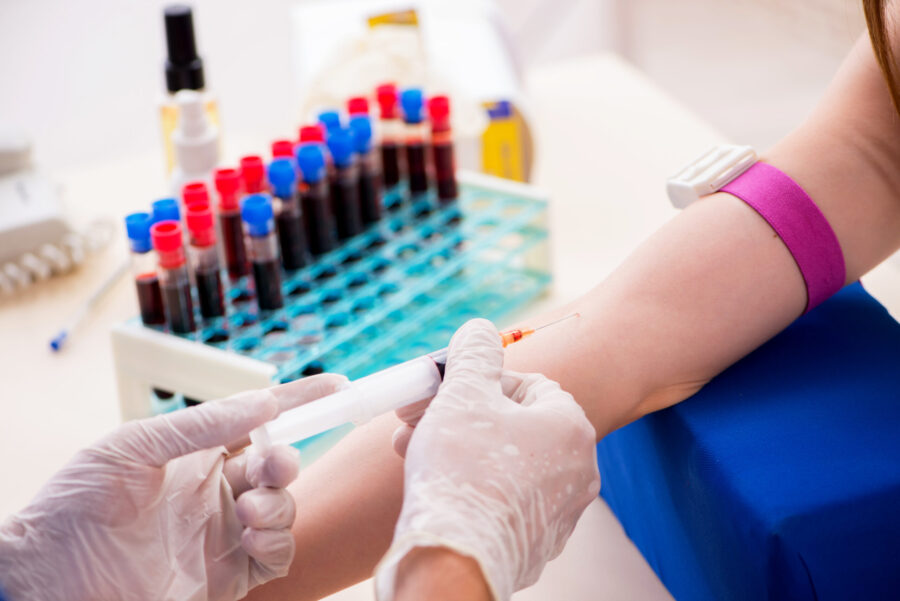
The ultimate achievement would be to detect breast cancer early on, via less invasive tests than tissue biopsies and mammograms. Routine screening would make early detection and treatment simpler and more effective. Catching breast cancer earlier has it’s obvious advantages and progress is certainly being made.
Screening by mammogram can detect early stages of cancer, but it uses x-rays (a mild dose), takes longer, needs to be done at a location that can be some distance from the woman’s home.
Although the detection and treatment of breast cancer can be successful, there is no guarantee that the patient won’t get it again, or even that it won’t spread. That said, the detection earlier does improve the survival rates drastically and makes treatment more effective.
Measuring ctDNA
By taking a blood sample, cell fragments can be detected to determine if cancer is present. Specifically, ctDNA is measured. This is a technique that has been around for years but it is being refined to offer earlier detection of many types of cancer.
Genetic information in blood
The blood plasma contains fragment of cfDNA. All cells have a life cycle, normal cells die, break up and end up in the blood before being excreted out of the body in one form or another. Old blood cells end up in stools and is why poop looks brown. Other cell fragments are excreted out through urine, saliva and sweat. It’s this constant shedding of DNA that makes forensic pathology possible. Every touch can pass on tiny pieces of DNA through skin cells, saliva contains cheek cells, hair contains dna etc. See The Translational Potential of Electrochemical DNA-Based Liquid Biopsy
Over time “we” have built up a library of DNA markers, the information contained within that DNA that points to male or female genes and so much more – all catalogued so probably pictures of what the person looks like can be extracted from DNA alone. DNA markers . See the article on the BBC website.
What is ctDNA?
Cells have structure and a nucleus that contains the information it needs to multiply. When the cells mutate, copy, delete, the nucleic acid is released, this is cfDNA gets into the blood plasma and can be detected in a liquid biopsy.
Tumours have cells. In much the same way that normal tissue grows cells which die and are replaced, so does cancer.
Circulating tumor DNA – bits of nucleic acid that are found in the blood plasma that has come specifically from tumours. From screening blood, it is possible to determine how far advanced it is. It is also therefore possible to monitor the progression of the cancer and whether treatment is working.
Next Generation Sequencing
NGS is the improvments on the way the blood is screened. It can differentiate between circulating free DNA and circulating tumour DNA on a smaller scale than before. This is where the earlier detection comes in. By being able to detect these fragments of Nucleic Acid in much smaller concentrations, it will be possible to detect smaller tumours.
Avanzini et al published a paper that tests the ctDNA to the size of the tumour, “A mathematical model of ctDNA shedding predicts tumor detection size“
The blood tests were taken from patients who were also being physically screened, so they could test the mathematical model for accuracy.
The sheer amount of effort being applied worldwide to improving the accuracy of methods to analyse ctDNA does suggest that early detection of breast cancer, and all kinds of cancers, through routine blood tests is not that far away.
« Reports of Breast Implant Illness increased in 2019 What is labiaplasty? »