6th November 2021 After surgery – the importance of self care

From small procedures to more lengthy operations, looking after yourself post-operation is important for the healing process to be effective and efficient, and to avoid complications.
Link between stress and healing
Although understood for centuries, recent explorations into the brain-skin connection are revealing the chemical and biological interactions that cause physical ailments.
Stress and psychophysiological ailments
A wide range of medical issues are deeply linked with stress and include among others, psoriasis, acne, types of dermatitis, vitiligo, alopecia, and urticaria. There are also external physiological factors that cause hair to fall out, skin to itch, rashes, spots; diet and medications can upset the normal skin health, but stress is a big factor that can exacerbate or cause problems.
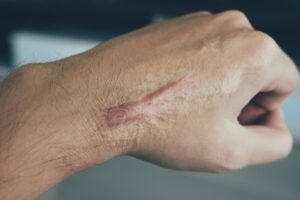
Keloid Scars
Keloid scars are believed to be an overproduction of the skin protein, collagen. They usually run in families, and are more frequent in dark skin such as afro-caribbean.
They are raised areas, shiny and soft protrusions that can be quite large. They occur sponatneously or, more frequently, in wound sites and are often larger than the initial wound.
Continuing to grow over months, they can stop growing but do not go away by themselves, they will need to have treatment, be it therapy such as freezing, or injections of Corticosteroid to reduce the scar tissue, or surgery – laser removal etc.
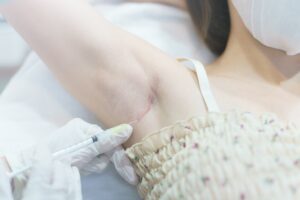
They are very closely linked to stress and give an example of why taking it easy and avoiding stress after surgery are so important. Worrying about any aspect of how you are healing, or even feeling stress regarding other matters can have a negative effect on the healing process. With many surgical procedures being carried out in order to improve the appearance, ensuring that the wound area heals as cleanly as possible is vital.
Your surgeon will most definitely advise you on the best course of action regarding after surgery care of you and the wound area, and supply you with printed notes to take with you. Although there is a lot to take in during consultations, it is important to make sure you have listened to your surgeon and to read through all the paperwork you have been given.
Self care after surgery
Although it depends on the kind of surgery, the location of the wound and the length of time you can take off work or family duties. Try to minimise stress, keep yourself healthy, not put too much strain on the body, and relax as much as possible.
Follow your surgeon’s advice and prepare for your recovery in advance, so you can focus on taking it as easy as possible, enlist the support of friends and family if you can or need to. A hernia operation or hysterectomy can be very limiting in physical tasks so you may need assistance to manage for a few weeks.
Before surgery
Listen to your surgeon, ask questions and write down notes so you fully understand the best course of action for recovery. Miss Sassoon will provide you with plenty of information so you will know how to look after yourself for the easiest and fastest healing. It is not difficult to get lost in all the information you are given, if you write it all down thoroughly you will be less likely to miss any important advice and give yourself the best opportunity to recover.
Take time to get your house clean and tidy. Depending on your type of operation, you may have to rest for several days or several weeks.
Walk through your everyday home activities and see where you can make it easier for yourself when you are back at home after your plastic surgery.
Changing your bedding, cleaning the bathroom and kitchen will ensure that you don’t overdo it after the operation. It might be worth stocking up on books, films and puzzle books or any other favourite activities so you can keep your brain occupied during the recovery period.
« Breast reduction for men Treasured chests – article from The Times »